A DIY picnic table project concept for a backyard that needs flexible seating without permanent bulk.
Planning guide • Reviewed October 13, 2026
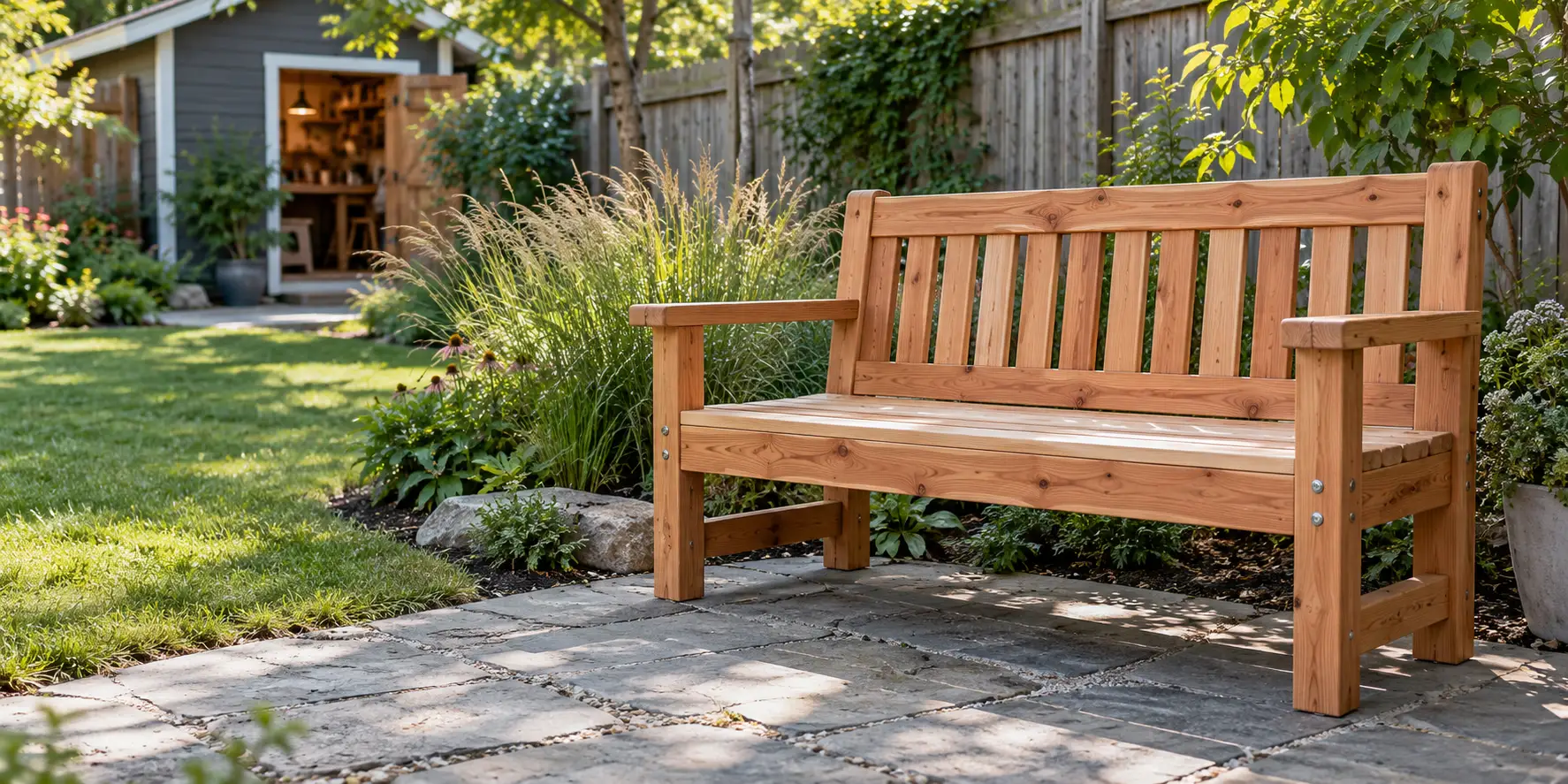
Important visual note: The bench shown above is an editorial visualization of a fixed outdoor bench. It does not document a verified folding mechanism or a plan included in any paid library.
A bench that converts into a picnic table can make sense when a patio or lawn needs to serve more than one purpose. The useful question is not whether the idea looks clever. It is whether a verified plan provides stable geometry, safe pivot points, secure locking positions, and dimensions that fit your space.
Start with the two positions
Before choosing lumber, mark the full footprint of both configurations on the ground. Include room for people to sit, stand, move around the table, and operate the conversion without pinching fingers or striking a wall, railing, or planter.
Bench mode
Check seat height, back angle, arm clearance, stability, and how the load transfers through the frame.
Table mode
Check tabletop height, leg clearance, level support, locking hardware, and usable seating depth.
Conversion path
Confirm the moving section clears hands, clothing, nearby objects, and the ground through the entire motion.
Outdoor exposure
Account for drainage, seasonal wood movement, fastener corrosion, finish maintenance, and ground contact.
Materials to evaluate
A final shopping list must come from the exact plan you select. For early budgeting, review these categories rather than guessing quantities:
Outdoor-suitable lumber: straight, dry boards appropriate for your climate and finish system.
Corrosion-resistant fasteners: the diameter, length, washers, and lock nuts specified by the plan.
Verified pivot and locking hardware: hardware must match the design load and keep both positions secure.
Exterior finish: compatible primer, paint, stain, or penetrating finish, including end-grain protection.
Safety equipment: eye protection, hearing protection, dust control, and clamps suited to each operation.
Measurements deserve a dry run
A convertible project has more interacting dimensions than a fixed bench. Build directly from a complete plan, verify every critical measurement against the drawing, and test the motion before applying finish. Do not scale a mechanism by eye from a photo.
For moving joints, confirm the plan identifies hole locations, bolt size, spacer or washer placement, stop positions, and a positive way to prevent accidental movement. If those details are absent, the plan is not ready to build.
Safety comes before the clever mechanism
Moving furniture can create pinch points and unexpected leverage. Keep hands clear during testing, support moving sections, use locking hardware specified by a trustworthy plan, and stop if the frame racks, binds, or shifts under load. When in doubt, ask a qualified woodworker or engineer to review the design.
How to evaluate a plan library
The producer currently markets Ted's Woodworking as a library of more than 16,000 project plans. That number and the producer's other product claims are not a substitute for inspecting the plan you intend to use.
Before buying, confirm the current price, refund terms, file format, support options, tool requirements, and whether the library contains the specific convertible bench design you want. Weekend Project Lab has not independently verified that this exact project is included.
Review the current offer, contents, price, and terms on the producer page before purchasing.
Measure the available area in both bench and table configurations.
Choose a verified plan with complete hardware and locking details.
Price the actual cut list using locally available lumber sizes.
Review every moving joint and pinch point before cutting.
Make a full-size template for any unusual pivot geometry.
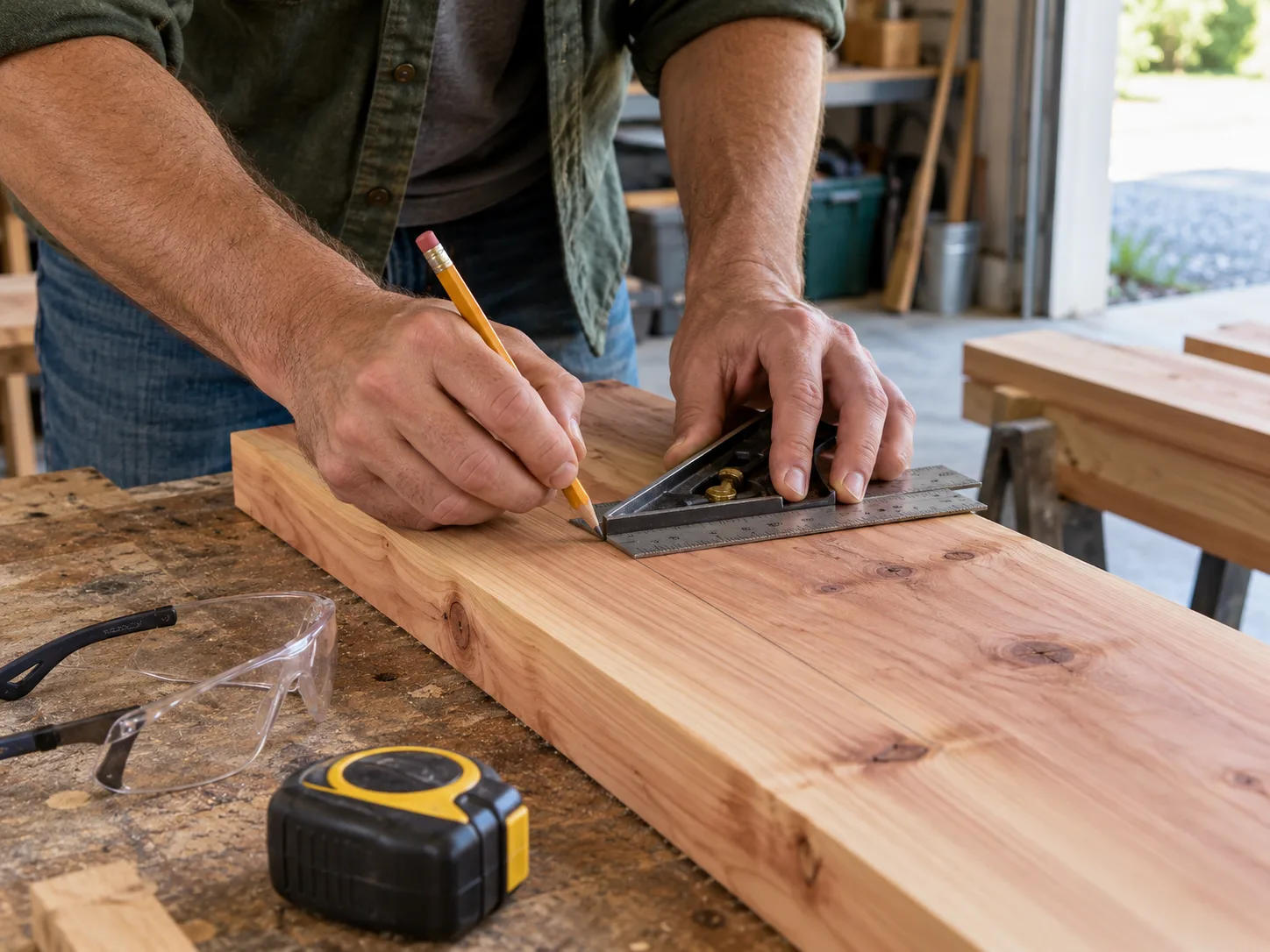
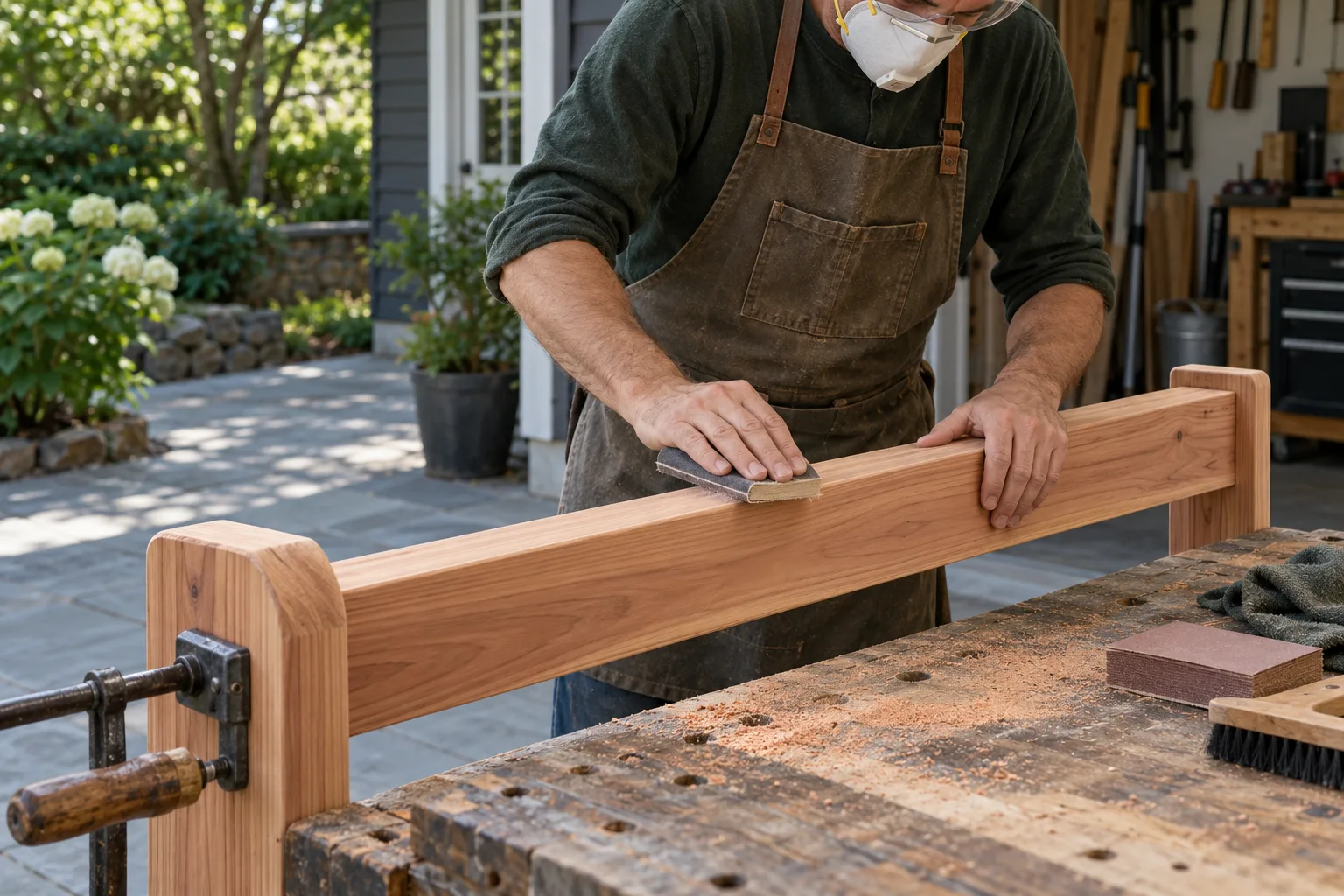
Image note: The photographs on this page were created as editorial illustrations. They show general woodworking preparation and do not reproduce a proprietary plan.
Choose your analytics preference
With your permission, Pinterest can receive page and offer-click events for advertising measurement. We never label a click as a purchase.